Use this Celtic Cross Tarot Reading when a simple one-card or three-card spread is not enough. It draws 10 unique cards from the complete 78-card Rider-Waite-Smith deck and places them in the cross-and-staff layout used by this tool: situation, challenge, root cause, past, goal, near future, self, outside influence, hopes and fears, and outcome.
The Celtic Cross is a traditional 10-card tarot spread arranged as a six-card cross and a four-card staff. Use it for one layered question involving history, motives, outside pressure, and a likely direction; choose a three-card or yes/no spread for a narrower decision.
The 1 minute 38 second tutorial moves from one focused question through the six-card cross, four-card staff, and one practical synthesis.
00:00Free Celtic Cross tarot spread
00:09The 10 card positions
00:23Ask one focused question
00:35Draw the Celtic Cross
00:46Read the central cross
01:02Read the four-card staff
01:18Combine the cards into one answer
How the reading becomes one answer
Read Cards 1 and 2 as the situation and crossing force, Cards 3 through 6 as root-to-near-future context, and Cards 7 through 10 as approach, outside pressure, hopes and fears, and likely direction. Repeated themes and tensions matter more than treating ten cards as unrelated predictions.
Reviewed by KiK, who has roughly 10 years of Tarot learning and interpretation experience. Method and access details reviewed August 1, 2026.
Tarot is a reflective tool for entertainment and self-exploration. It does not replace medical, legal, financial, mental-health, safety, or other professional advice.
Celtic Cross position map
A Celtic Cross tarot spread uses 10 fixed positions. The card meaning changes with its job in the layout, so read the position question before applying a general upright or reversed definition.
1
Present situation
Question: What is the central energy of the situation right now?
Read it: Read this card as the issue the rest of the spread must explain, not as a complete answer by itself.
2
Crossing challenge
Question: What is helping, testing, or blocking the present situation?
Read it: Compare it directly with Card 1. Harmony shows support; tension identifies the main obstacle or tradeoff.
3
Root cause
Question: What deeper foundation, motive, or past pattern is underneath the issue?
Read it: This card often explains why the situation has emotional weight or why the same pattern keeps returning.
4
Recent past
Question: What event or influence has just shaped the current position?
Read it: Treat it as context that is fading but still active enough to affect present choices.
5
Conscious goal
Question: What outcome, belief, or ideal is the querent actively pursuing?
Read it: Check whether this goal supports Cards 1 and 3 or conflicts with what the situation actually needs.
6
Near future
Question: What is most likely to develop next if the current pattern continues?
Read it: This is the next phase rather than the final result. Read it as a condition you can prepare for or influence.
7
Self and approach
Question: How is the querent seeing, carrying, or responding to the situation?
Read it: Use this card to identify agency, blind spots, strengths, and the attitude most available for change.
8
Outside influence
Question: What people, systems, expectations, or environmental forces are involved?
Read it: Separate what belongs to the querent from pressure, support, or information coming from outside.
9
Hopes and fears
Question: What desired outcome and feared outcome are emotionally charging the question?
Read it: The same card can express both. Name the hope and fear separately before deciding which one fits the evidence.
10
Final outcome
Question: Where does the situation lead if the present pattern continues?
Read it: Read this as the likely direction under current conditions, then compare it with Card 6 and the choices in Card 7.
How to combine the 10 cards
Do not read a Celtic Cross as 10 unrelated mini-readings. Build one answer in four passes, checking whether later cards confirm, complicate, or redirect the central pair.
Step 1
Read the central cross
Start with Cards 1 and 2. State the present issue in one sentence, then name the force that supports or crosses it. This pair is the thesis of the reading.
Step 2
Trace the vertical timeline
Connect Cards 3 through 6 as root, recent past, conscious goal, and near future. Look for movement: what is ending, what is being pursued, and what develops next.
Step 3
Read the staff
Use Cards 7 through 10 to compare the querent's approach with the outside environment, emotional expectations, and likely result. This shows where choice meets circumstance.
Step 4
Synthesize one story
Related archetypes, recurring visual symbols, suit patterns across the Major and Minor Arcana, elemental motifs, and narrative echoes matter more than isolated definitions. Finish with the pattern, the tension, and one practical next step.
Complete Celtic Cross reading example
Question: What should I understand before deciding whether to accept a new role?
1
Present situation
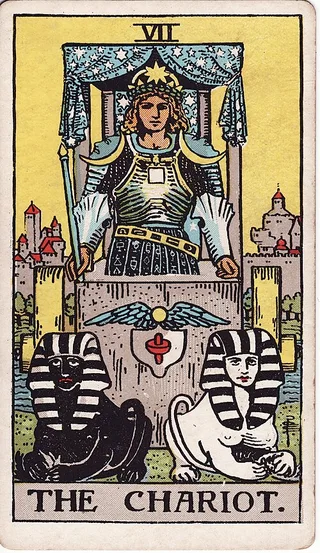
The Chariot
2
Crossing challenge
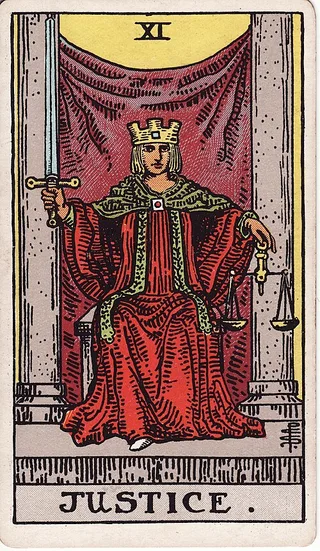
Justice
3
Root cause
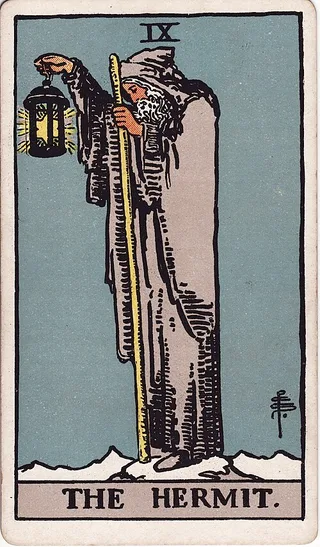
The Hermit
4
Recent past
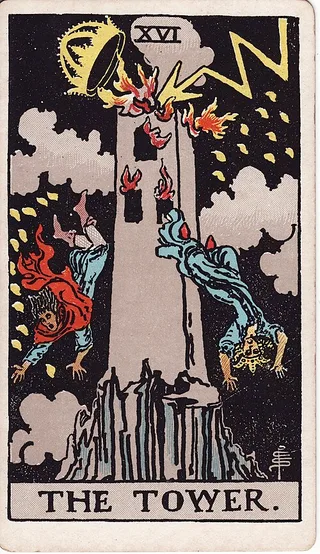
The Tower
5
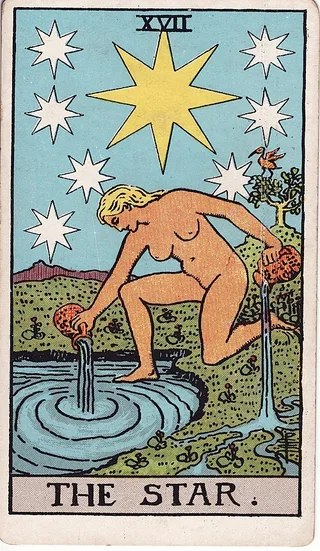
Conscious goal
The Star
6
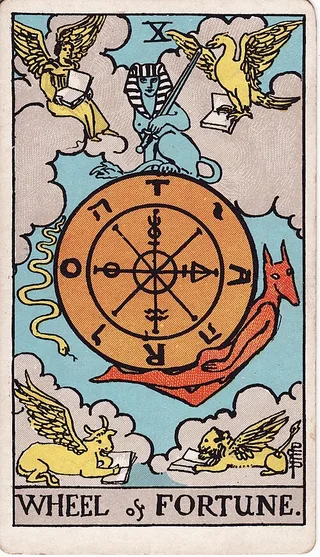
Near future
Wheel of Fortune
7
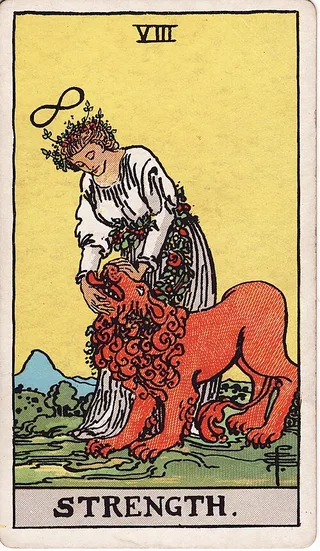
Self and approach
Strength
8
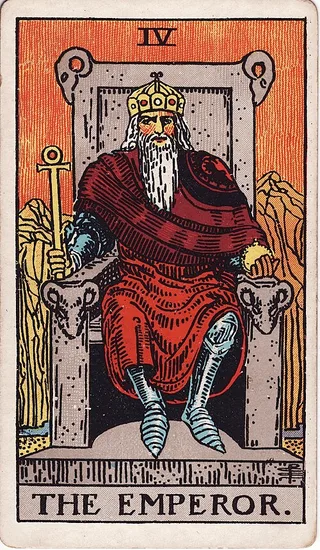
Outside influence
The Emperor
9
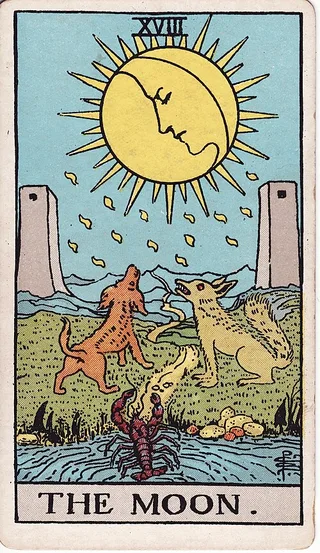
Hopes and fears
The Moon
10
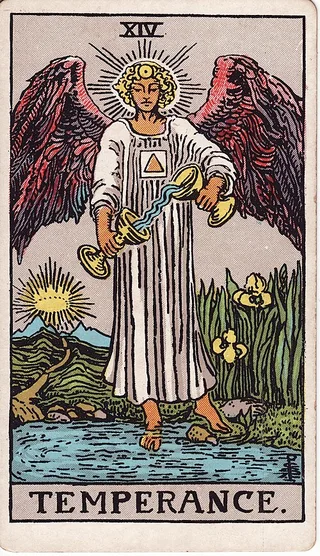
Final outcome
Temperance
Celtic Cross tarot spread layout. This worked example uses 10 unique cards from the complete 78-card Rider-Waite-Smith deck. Images: Public-domain Rider-Waite-Smith artwork.
1
Present situation
The Chariot - upright
There is real momentum toward a career move, but success requires a clear direction rather than speed alone.
2
Crossing challenge
Justice - reversed
The offer may contain incomplete information, uneven terms, or an assumption that has not been checked.
3
Root cause
The Hermit - upright
The decision grows from a longer search for meaningful work and a need to trust independent judgment.
4
Recent past
The Tower - upright
A disruptive change at work broke the old sense of stability and made a new path feel urgent.
5
Conscious goal
The Star - upright
The desired outcome is renewal: work that feels hopeful, visible, and aligned with a larger purpose.
6
Near future
Wheel of Fortune - upright
Timing and circumstances will shift quickly, creating an opening but also reducing the time available to compare options.
7
Self and approach
Strength - upright
A calm, measured negotiation will be more effective than proving courage through an immediate yes.
8
Outside influence
The Emperor - reversed
Leadership structure or decision authority around the role may be rigid, unclear, or less stable than it first appears.
9
Hopes and fears
The Moon - upright
There is hope that intuition is pointing toward the right future and fear that uncertainty is hiding a serious risk.
10
Final outcome
Temperance - upright
The strongest path is gradual integration: clarify terms, negotiate boundaries, and make a balanced transition instead of a dramatic leap.
Synthesis
The Chariot and Wheel of Fortune show a genuine opening and forward movement, while reversed Justice and reversed Emperor warn that the terms and authority structure are not yet clear. The Hermit, Star, and Strength say the decision should serve a considered long-term direction, not only provide escape from the Tower event in the recent past.
Temperance does not reject the opportunity. It changes the recommended approach: request the missing facts, negotiate responsibilities and timing, and build a measured transition. The practical next step is to clarify reporting lines, success measures, and written terms before accepting.
When to use a Celtic Cross spread
Use the Celtic Cross for one complex question with interacting history, motives, outside pressure, and possible outcomes. A narrower spread is often clearer when the decision itself is simple.
Use all 10 cards when
- Several people, motives, or time periods affect the same issue.
- You need to separate the root cause from the immediate challenge.
- The question concerns a major love, career, money, or life transition.
- You are ready to compare your own approach with external conditions.
- You are asking multiple unrelated questions that should be separated.
- The question asks tarot to replace medical, legal, financial, or safety advice.
Sources and methodology
A. E. Waite published the Celtic Cross method in The Pictorial Key to the Tarot in 1910. Position names and numbering vary across later tarot traditions, so this guide declares one fixed cross-and-staff map and applies it consistently before any cards are drawn.
In the interactive tool, 10 unique cards are randomized at draw time from the complete 78-card Rider-Waite-Smith deck. Each card is assigned upright or reversed orientation, then interpreted through its numbered Celtic Cross position. The same card can therefore carry a different emphasis in the challenge, near-future, or outcome position.
The result is reflective guidance, not a guaranteed prediction and not professional advice. Use it to name patterns, test assumptions, and choose a practical next step. For deeper study, compare each result with the tarot card meanings guide.
How to use a Celtic Cross tarot spread
Ask one focused question about a complex situation before drawing cards.
Read Cards 1 and 2 as the present situation and the crossing challenge.
Read Cards 3 to 6 as the root, recent past, conscious goal, and near future.
Read Cards 7 to 10 as your approach, outside influence, hopes and fears, and likely outcome.
Celtic Cross tarot reading examples
Celtic Cross searches need more than a card list. The value is synthesis: present issue, challenge, root, past, goal, near future, self, outside influence, hopes and fears, and outcome.
Present: The Hanged Man, Challenge: The Emperor, Outcome: Justice
What is the real issue in this decision?
The Hanged Man shows delay and a need to see differently. The Emperor as challenge points to control, rules, or authority pressure. Justice as outcome says the decision improves when facts, boundaries, and consequences are made explicit.
Root: The Moon, Near future: Strength, Outside influence: Three of Pentacles
How should I handle this complex situation?
The Moon shows uncertainty at the root. Strength asks for calm discipline in the near future. Three of Pentacles says outside help, collaboration, or expert input can make the path less confusing.
This page is part of Destin AI's tarot hub. Start from the main tarot page when you need a broad free AI tarot reading, then use the focused tools and card meanings for deeper context.
It is a traditional 10-card tarot layout used for deep readings. The spread covers the present issue, challenge, root cause, past, goal, future, self, environment, hopes and fears, and outcome.
When should I use the Celtic Cross?
Use it when the question is complex and a one-card or three-card reading feels too shallow. It is best for layered situations with emotional, practical, and timing factors.
Is this Celtic Cross tarot reading free?
Yes. You can draw 10 unique cards from the full 78-card deck for free and embed the widget on your own website.